SOC 2 Type II certified
Traversal has received and maintains its SOC 2 Type II attestation, applicable to all deployment options.
- SaaS
- Single-tenant SaaS
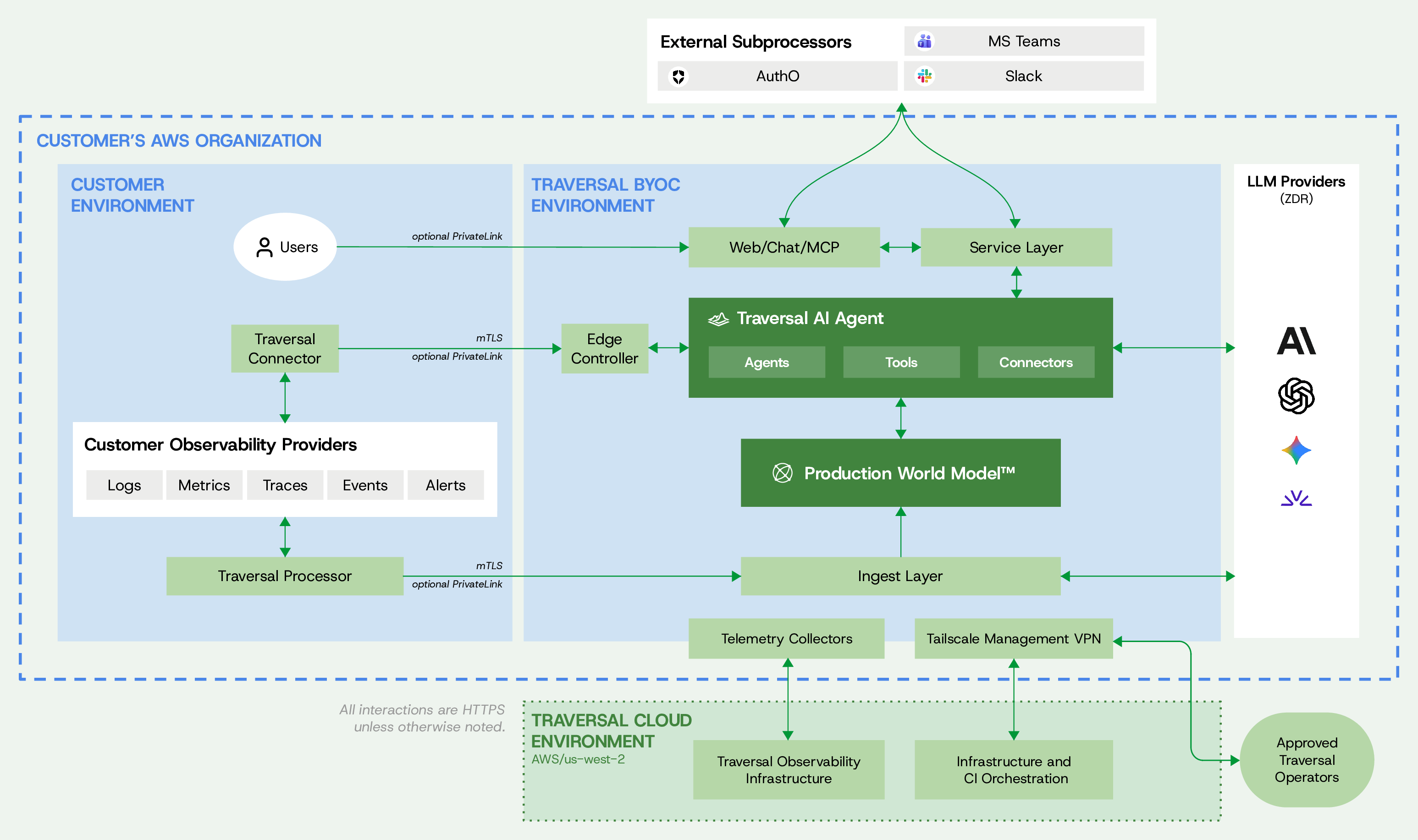
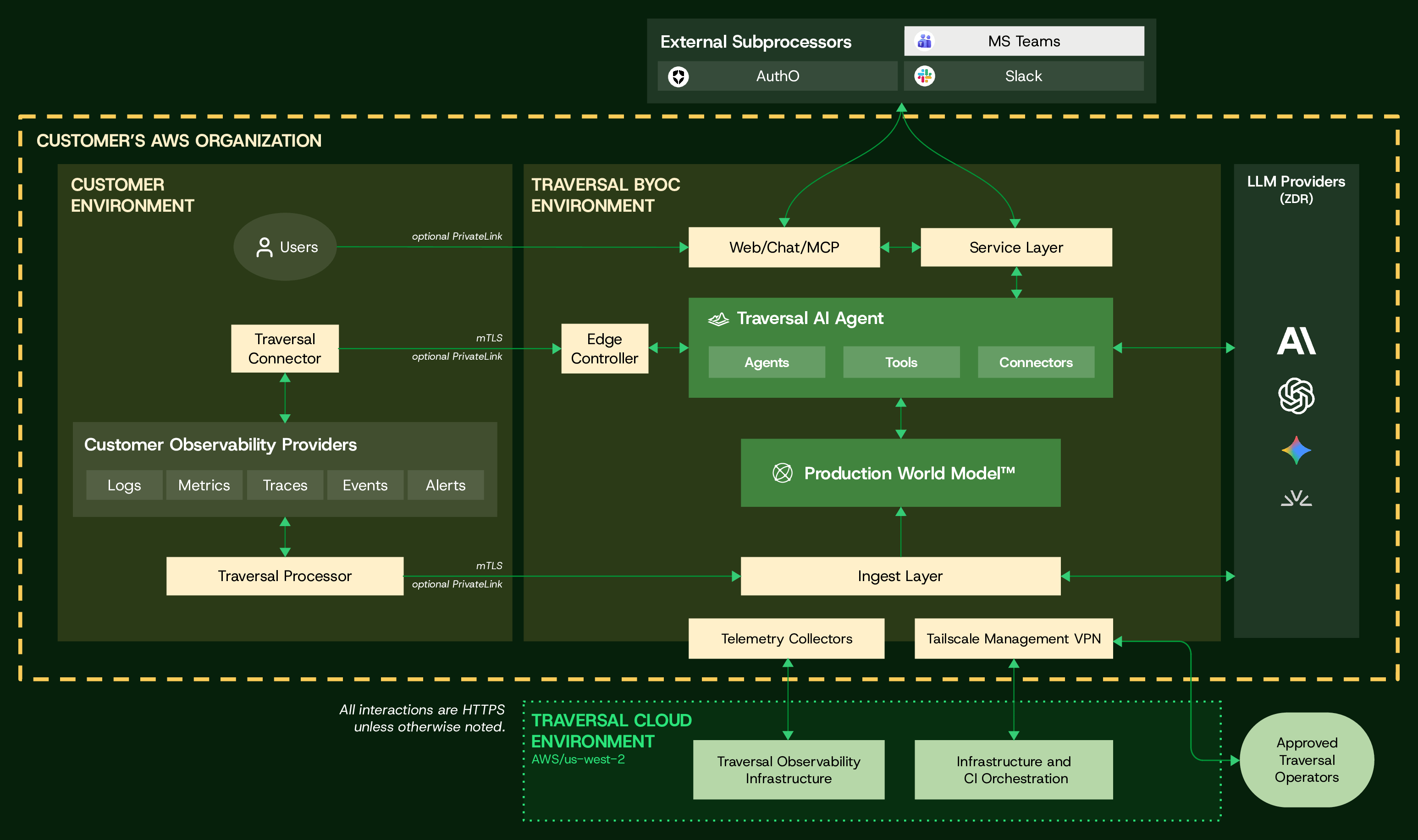
- BYOC (Bring Your Own Cloud)
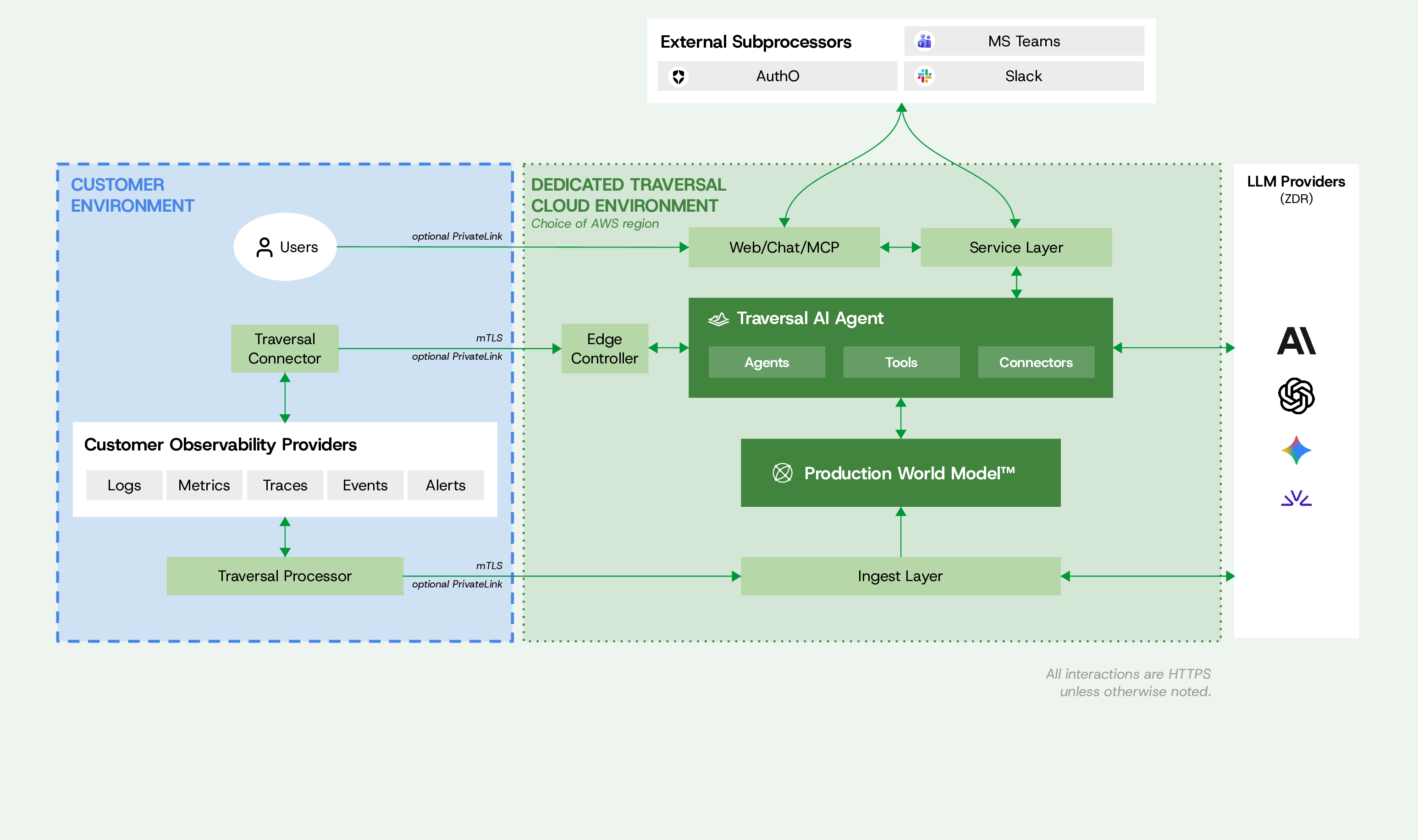
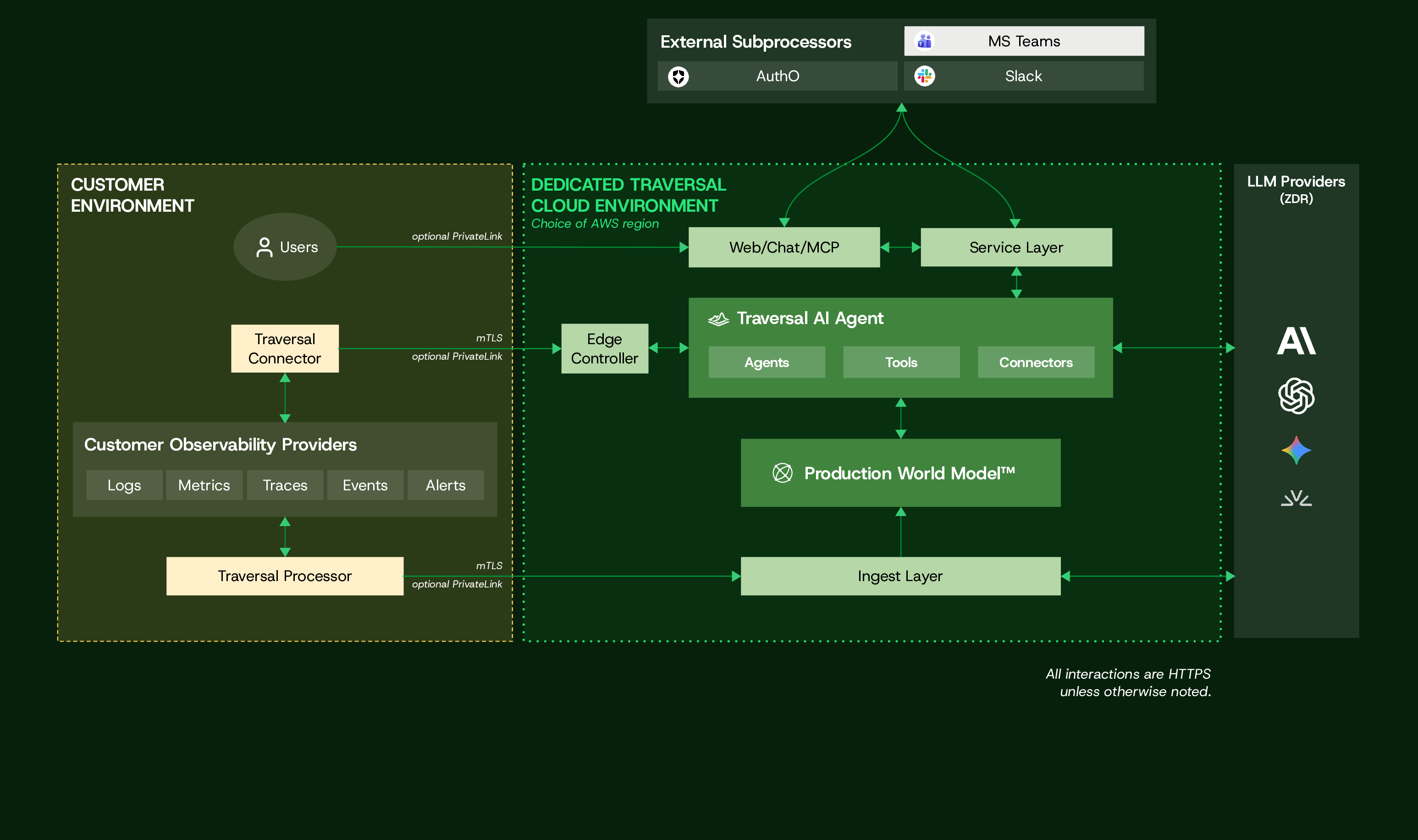
The easiest way to get started in minutes with Traversal is by signing up on Traversal’s SaaS/cloud offering. Your data and connections to your observability providers remain fully secure, whether they are cloud vendors or you host them in your internal infrastructure.Communication from the Traversal Connector and Traversal Processor to the Traversal SaaS travels over the public internet and is secured with mTLS — both sides authenticate with certificates, and all traffic is encrypted in transit.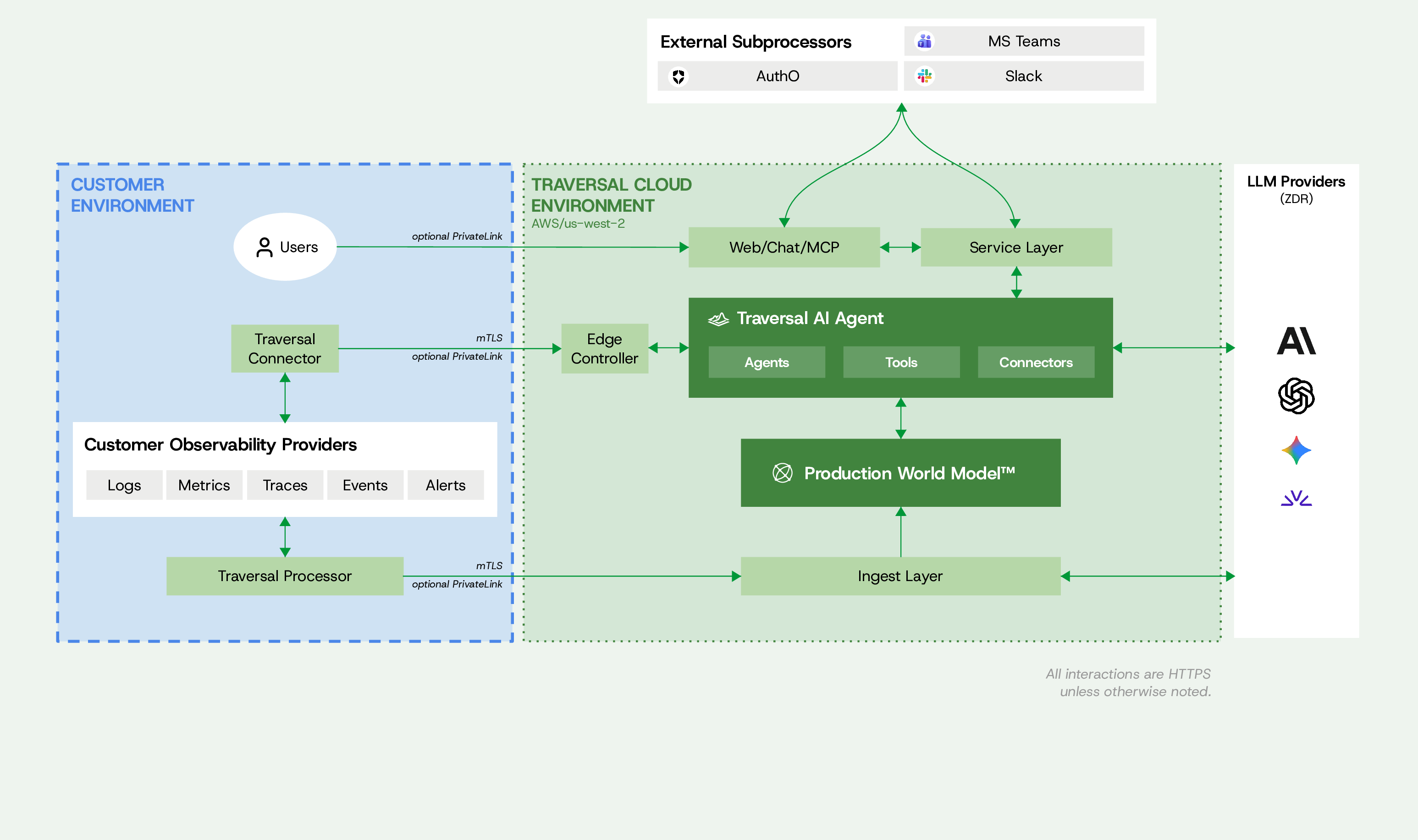
Tenant isolation
At every layer — from frontend to database and agentic workflows.
Zero data retention
On LLM calls, under zero-data-retention agreements with Traversal’s LLM providers.
Secure access
Connect to your private data sources and systems with the Traversal Connector.
Minimal egress
Reduce data leaving your environment with the Traversal Processor.
Data redaction
Customer-configured data redaction and obfuscation at the edge.
Strong authentication
SSO and MFA for all users.